The spec layer that makes vibe coding production-ready.

VibeMap is an AI spec generator for spec-driven development. Describe your idea and get a linked spec that Cursor, Claude Code, or any AI coding agent can build from.

Acceptance criteria covered

Sprint 1 to sprint 3

142 / 150

Stories built per sprint

SoyourAIbuildsitrightthefirsttime.

Let’s show youhow it works

Context is everything.

In VibeMap you chat with your requirements, not your codebase. Your idea will change. Absorb that change in the spec in seconds, then hand your IDE one batched, settled change instead of a slow round-trip for every prompt.

Prompt the IDE directly0 changes shipped
You
IDE
0.0s
Plan in VibeMap, batch to the IDE0 refinements
You
VibeMapVibeMap
IDE
0.0s
01.

Describe it once. Get the whole linked spec.

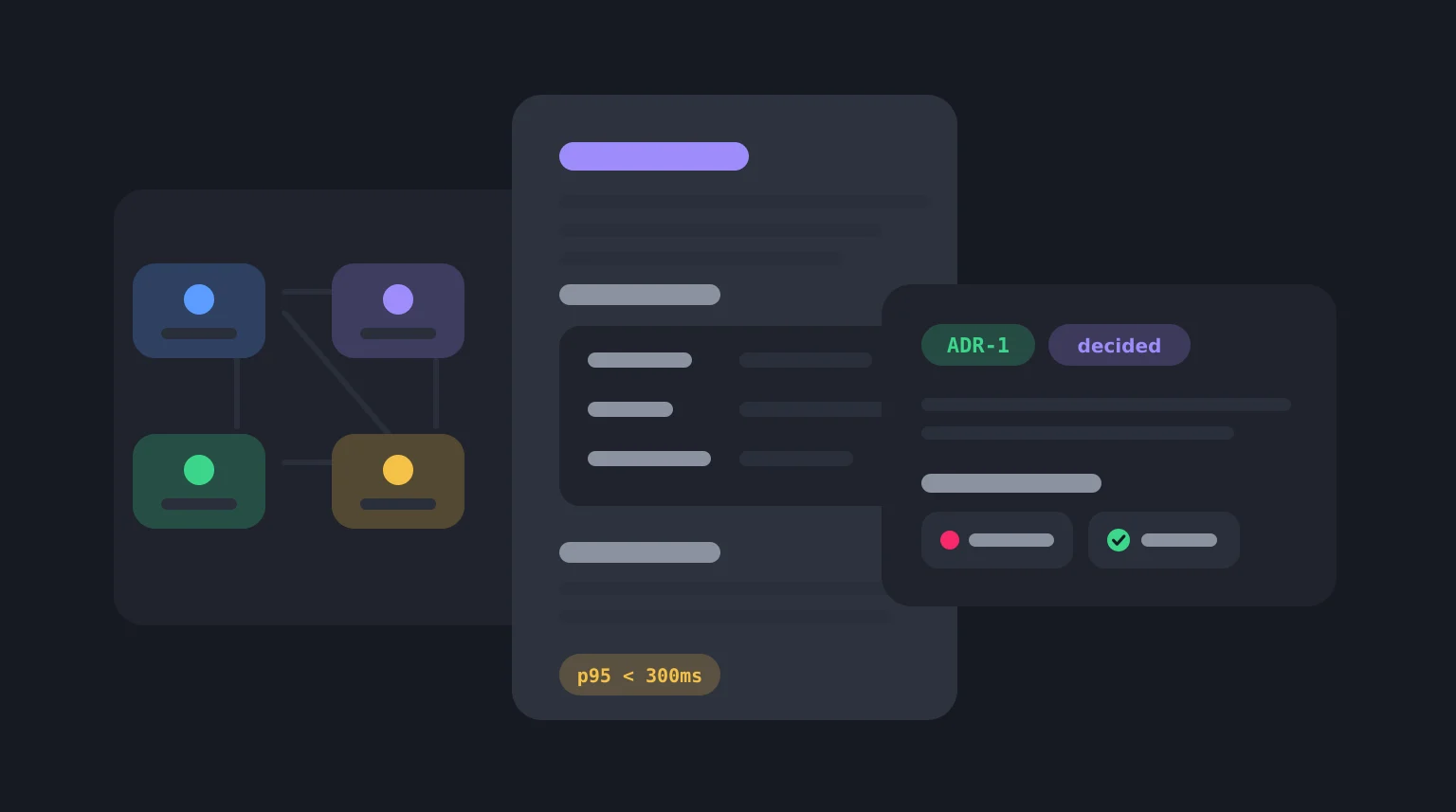
One paragraph in. VibeMap generates the personas, features, user stories, acceptance criteria, pages, and database schema, then links every one back to the artifact that justified it.

See every artifact
Idea

Generating
02.

Prioritised into a buildable sprint plan.

The assets don't arrive as a flat list. On Pro and above, VibeMap sequences them into sprints: what to build first and what depends on what, so you start with an order, not a pile.

See the sprint planner
6

Features sequenced

3

Sprints

0

Blocked

Sprint 1Sprint 2Sprint 3
Feedback threads
Client portals
Approvals & audit
Notifications
Billing & metering
Launch polish
03.

MCP hands the spec straight to your IDE.

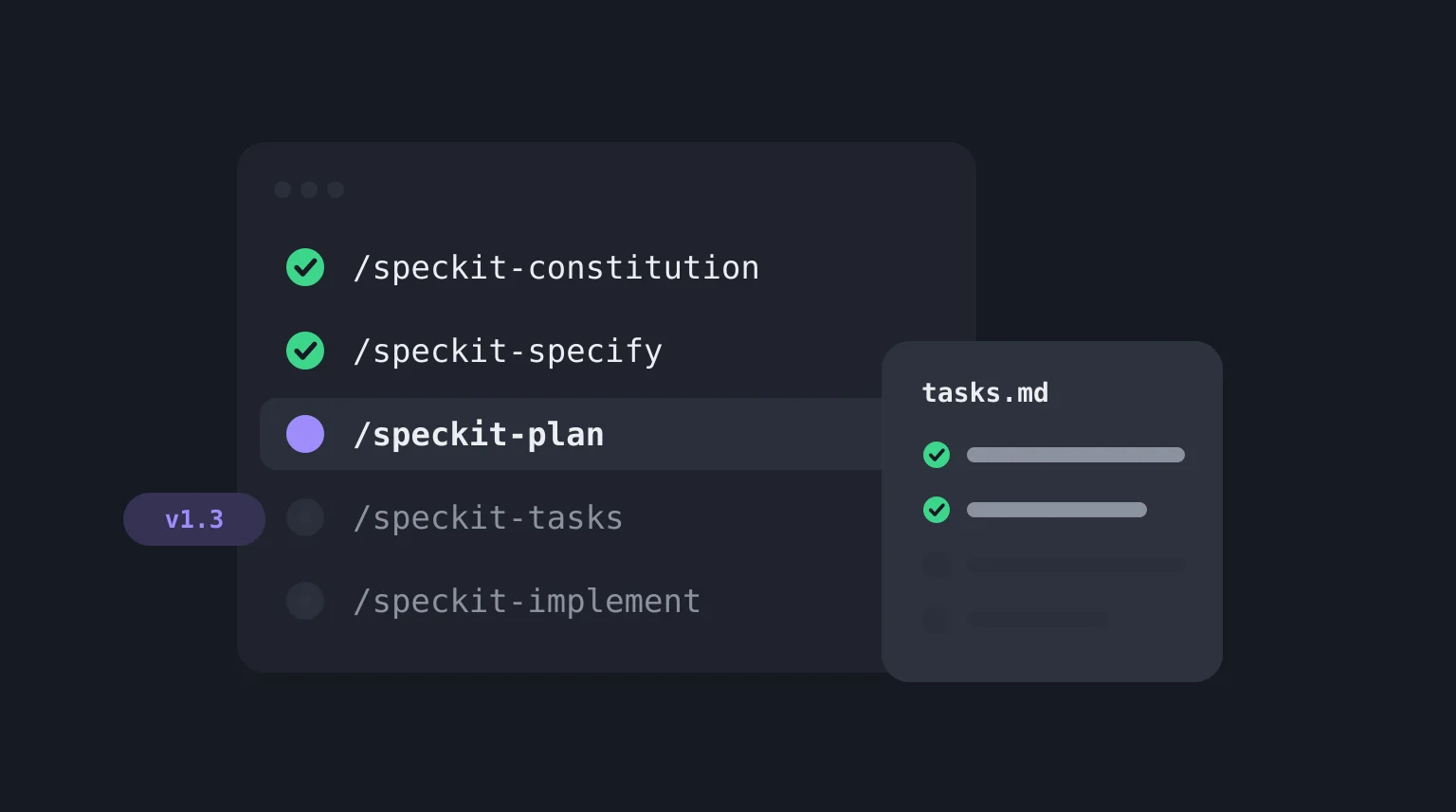
Your coding agent, in Cursor or Claude Code, pulls each acceptance criterion over MCP and builds it test-first in your own repo. Or, on Pro, the App Builder compiles the spec into a running app on your own GitHub, Supabase, and Vercel. No copy-paste, no lock-in.

Read the MCP docs

VibeMap

your context

context

MCP

one protocol

reasoning

LLMs

OpenAI
Claude
Gemini
build

IDEs

Cursor
Windsurf
VS Code
publish

deploy targets

GitHub
Supabase
Vercel

Vibe coding gets you a demo. Then the rewrites start.

The first prompt feels like magic. Then every session starts from zero, and you burn tokens re-deriving choices you already made. Spec-driven development settles those choices in a spec first, so the AI builds against decisions instead of guesses.

Code quality spirals

Conflicting files and bloated code pile up until the codebase rots.

Clean, maintainable code

Features, schemas, and flows are defined upfront, so AI builds it right the first time.

Fast MVP, slow launch

The prototype is quick. Production takes months of rewrites and edge cases.

Production-ready from day one

Acceptance criteria, error scenarios, and data constraints are planned before code.

Context goes stale

Context windows fill with stale info. Nobody knows what was decided.

Single source of truth

One living blueprint keeps humans and AI aligned as the product evolves.

Endless token burn

Every prompt re-explains the product and re-derives settled decisions.

Optimised context cuts cost

A structured blueprint feeds AI exactly what it needs, once. Fewer retries.

Plans for your stack. Ships onto it.

VibeMap writes specs for the models, IDEs, and frameworks you already use. On Pro, the App Builder publishes the app to accounts you own.

OpenAI
Anthropic
Gemini
MCP
Cursor
Windsurf
VS Code
GitHub
Supabase
PostgreSQL
Next.js
React
TypeScript
Tailwind
Stripe
Vercel
OpenAI
Anthropic
Gemini
MCP
Cursor
Windsurf
VS Code
GitHub
Supabase
PostgreSQL
Next.js
React
TypeScript
Tailwind
Stripe
Vercel
OpenAI
Anthropic
Gemini
MCP
Cursor
Windsurf
VS Code
GitHub
Supabase
PostgreSQL
Next.js
React
TypeScript
Tailwind
Stripe
Vercel
OpenAI
Anthropic
Gemini
MCP
Cursor
Windsurf
VS Code
GitHub
Supabase
PostgreSQL
Next.js
React
TypeScript
Tailwind
Stripe
Vercel

Built for whoever writes the brief.

Indie hackers

Skip the blank page. Go from a paragraph to a Cursor-ready spec, with schema, stories, and acceptance criteria, in 30 minutes.

How indie hackers use it

Technical founders

Get the product out of your head and into one document your first hire, contractor, and investor can all read.

How technical founders use it

Product managers

Personas, user stories, and Given/When/Then acceptance criteria, downloadable as one markdown dev spec.

How product managers use it

Agencies

Turn a discovery call into client-ready scope in a single working session.

How agencies use it

Simple pricing, powerful results.

Start free. No credit card required. Upgrade when you need more.

Free

Free

Explore the blueprint workflow and get started with your first project.

Start your first spec
  • 300,000 tokens / month
  • 1 projects maximum
  • Economy models
  • Core Generation: Project Summary, Features, User Stories, Acceptance Criteria, Personas
  • MCP Server Access

Starter

$19/month

More features, projects, and tokens for production-ready projects.

Start Starter
  • 1,750,000 tokens / month
  • 3 projects maximum
  • Economy+ models
  • Everything from Free plus: Wireframe Pages, Page Sections, Database Schema
  • AI Agent Chat
  • MCP Server Access

Pro

Most popular

$49/month

Unlimited projects, premium models, and the App Builder.

Start Pro
  • 7,000,000 tokens / month
  • Unlimited projects
  • Premium models
  • All generation from Starter
  • AI Agent Chat
  • App Builder (deploys to your GitHub + Vercel)
  • MCP Server Access

Team

$79/month

Shared projects, billing, and one token budget across your whole team.

Start Team
  • 18,000,000 tokens / month
  • Unlimited projects
  • Premium+ models
  • All generation from Pro
  • AI Agent Chat
  • App Builder (deploys to your GitHub + Vercel)
  • Shared Team Workspace
  • Owner / Admin / Member Roles
  • MCP Server Access

Enterprise

$199/month

The biggest allowance and routing up to frontier models.

Start Enterprise
  • 48,000,000 tokens / month
  • Unlimited projects
  • All models
  • All generation from Team
  • AI Agent Chat
  • App Builder (deploys to your GitHub + Vercel)
  • Shared Team Workspace
  • Owner / Admin / Member Roles
  • MCP Server Access
  • Jira + Confluence export

Questions, answered.

VibeMap is an AI spec generator for spec-driven development. You describe an app idea in plain English, and VibeMap generates a linked product spec: personas, features, user stories, Gherkin-style acceptance criteria, a page inventory, and a relational database schema, with every artifact traced back to the one that justified it. A first pass takes about 30 minutes and needs no product management experience. AI coding tools such as Cursor and Claude Code then read the spec through the VibeMap MCP server and build against it. On Pro and above, the App Builder can also compile the spec into a running app pushed to your own GitHub repo.

Spec-driven development is a way of building software where a structured specification, not the prompt history or the code, is the source of truth an AI coding agent builds from. VibeMap writes that specification for you. Instead of drafting markdown specs by hand, you describe the product and VibeMap generates linked personas, user stories, acceptance criteria, pages, and schema, then keeps them consistent as you change them. The full definition is at vibemap.ai/blog/spec-driven-development, and how VibeMap runs the workflow end to end is at vibemap.ai/ai-product-planning.

Yes. VibeMap publishes an MCP server (@vibemap.ai/mcp-server on npm) that connects your spec directly to MCP-compatible agents like Cursor, Claude Code, and Windsurf. The agent reads personas, user stories, acceptance criteria, and database schema straight from your VibeMap project — no copy-pasting context into prompts. This keeps the agent grounded in one source of truth while it builds. MCP access is open on every VibeMap plan, including Free.

Lovable, Bolt, and Base44 generate working prototypes directly from a prompt. VibeMap starts upstream: it produces the linked specification — personas, user stories, acceptance criteria, pages, and schema — that those tools or your own AI coding agent build from. On Pro and above, the VibeMap App Builder can also compile that spec into a running Next.js and Supabase app pushed to your own GitHub repo, so the code starts from a reviewed spec rather than a prompt. The practical difference shows up in month two: a prototype built from a prompt has no artifact explaining why it works the way it does, while a VibeMap spec does. Detailed comparisons are at vibemap.ai/alternatives.

VibeMap has five tiers, billed monthly or yearly: Free at $0, Starter at $19 a month or $182/yr, Pro at $49 or $470/yr, Team at $79 or $758/yr, and Enterprise at $199 or $1,910/yr. Every paid plan has a 14-day free trial on monthly billing: card required, nothing to pay if you cancel before day 14. Yearly costs about 20% less; promo codes apply to monthly plans only. The Free plan needs no credit card and covers one project with the core pipeline — summary, personas, features, user stories, and acceptance criteria. Starter adds pages, sections, schema, the Blueprint map, and the conversational agent. Pro adds the App Builder, sprint planner, dependency graph, stack proposal, and system design spec. Team adds shared workspaces; Enterprise adds the biggest allowance and frontier models. Or try vibemap.ai/demo without signing up.

This is the standard failure mode of credit-metered AI app builders, and VibeMap's design avoids most of it. Most of what VibeMap generates is specification, so a wrong answer is usually a paragraph you edit by hand rather than a build you re-run. The App Builder on Pro and above does generate code, but it first shows a free build plan of what it will compile and which pages need AI, before any tokens are spent, and it type-checks and repairs its own output before pushing. Any authoring your own coding agent does over MCP costs nothing from your VibeMap budget. You are billed when VibeMap generates, not when you correct it.

On paid plans, no. Your inputs and generated outputs are not used by VibeMap or by VibeMap's LLM providers to train foundation models, and this is enforced at the gateway: paid inference is routed through OpenRouter with a no-data-collection policy that restricts routing to upstream providers whose own policy is not to log or train on prompts. The full detail, including what applies on the free tier, is in the VibeMap privacy policy at vibemap.ai/privacy.

A complete first pass in VibeMap takes 10 to 30 minutes. You sign in, click New Project, and describe the product in plain English. VibeMap asks a few clarifying questions about target users, technical stack, and constraints, then runs a multi-step pipeline that produces the blueprint: personas, features, user stories, acceptance criteria, pages, and schema. Artifacts stream in as they are generated, so you can read the personas while the stories are still being written. Refining the result through the conversational agent typically takes another 15 to 30 minutes.

We use cookies to understand how VibeMap is used and to improve it. If you decline, or until you choose, we only count visits anonymously, without storing anything on your device. See our privacy policy.